


The use of fuzzy model had been proved to be very useful
for industrial applications.
This research explores the extraction of dynamic fuzzy models from
input output measurements.
Some of the advantages related with the use of this technique are
the modeling of non-linear systems with small amounts of
information (I/O measurements) and the generation of linguistic
information about the system. The main disadvantages are that
sometimes the number of linguistic terms can be too big such that
the model is not understandable in the linguistic framework and the accuracy
is proportional to the complexity of the model.
The present research explores the criteria that can guide the parameter choice
(model order, number of rules or fuzzy sets, inference method,etc.) in the
identification process. The aim is to guide the user of this technique
in a way that he/she can know where and when to use it.
Also, some parameter fitting algorithms had been explored.
The result
of an identification process is shown in the next figure, the original
output was generated by the dynamic system

where

the non-linear function f was "fitted" by a fuzzy system with 64 rules.
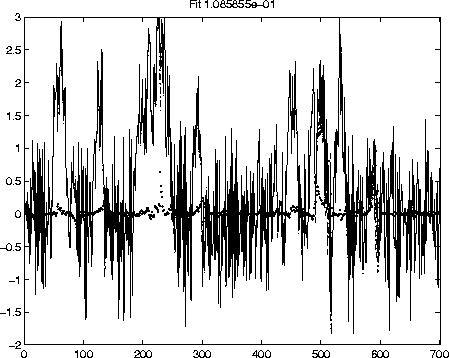
Figure 18: Identification of a dynamic system using fuzzy techniques:
Original system (-), identified system (.-), error (.)