Securing healthcare services is a complex, multi-dimensional challenge that requires a defence-in-depth strategy. Indeed, there are multiple security facets which have to be tackled when developing cybersecurity solutions for the (e-)health sector. Obviously, one of the most security-critical assets is medical data, such as digital patient records. This data is without doubt very privacy-sensitive, and safeguarding its integrity and authenticity is of uttermost importance. Incorrect or incomplete medical data records results in wrong diagnoses or treatments, and hence endangers the safety of the patient. Another important security challenge is to protect the medical infrastructure itself. This includes the IT infrastructure, but also medical equipment – for example X-ray machines – and medical devices. From a security point of view, availability has the highest priority. If these devices do not work correctly, the life of the patient could be at stake.
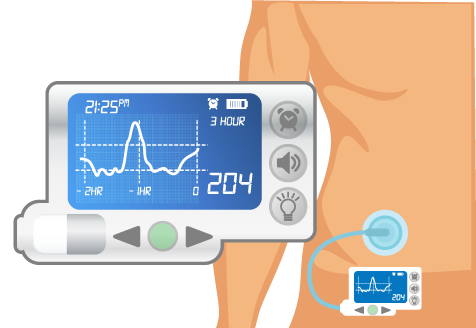
Currently, most implanted medical devices (IMDs) such as pacemakers, insulin pumps, and neurostimulators include wireless capabilities allowing that users can monitor and reprogram remotely through an external device programmer. One of the main advantages of this wireless communication interface is that patients can be monitored more closely, which improves the quality of the medical treatment. However, this connectivity also creates security risks, as adversaries could use the wireless link to attach the medical implant.
The KU Leuven – COSIC research team, member of the ProTego consortium, investigated the security of three common types of medical implants: Implantable Cardiac Defibrillators (ICDs) [1], insulin pumps [2] and neurostimulators [3]. The devices that were studied, were 5-10 years old and available on the market (i.e. actually used by thousands and probably even millions of patients). One of the most surprising outcomes of the research was that no cryptography was used in any of the IMDs to protect the wireless communication interface. Instead, the devices only relied on proprietary communication protocols. However, non-surprisingly, our research has shown that these protocols can be reverse-engineered, even by relying solely on commodity hardware. This security through obscurity approach – i.e. keeping the specifications secret – goes against the best practices followed by the security community, in which security experts thoroughly review cryptographic solutions before use. Therefore, it is strongly recommended to use lightweight and strong cryptographic solutions to protect access to medical devices.
There is currently a trend to even further increase the wireless connectivity of future generations of medical implants. For example, Bluetooth Low Energy (BLE) can be used to connect an IMD to the patients mobile phone. Although this will offer several advantages from a clinical point of view, the attack surface will also increase. Security vulnerabilities on the mobile phone could potentially be exploited to get access to the IMD. Moreover, since mobile phones typically have multiple communication interfaces (Bluetooth, WIFI, mobile network connectivity, etc.), the adversary could use any of these interfaces to (in)directly gain access to the medical implant. This clearly shows that vendors of medical equipment and devices need to prioritize security in their design, and preferably rely on open security standards and solutions.
This blog post was written for the ProTego project by Dave Singelee (KU Leuven).
References
[1] E. Marin, D. Singelée, F. D. Garcia, T. Chothia, R. Willems, and B. Preneel, “On the (in)security of the Latest Generation Implantable Cardiac Defibrillators and How to Secure Them,” In Annual Computer Security Applications Conference (ACSAC), ACM, pp. 226-236 , 2016.
[2] E. Marin, D. Singelée, B. Yang, I. Verbauwhede, and B. Preneel, “On the Feasibility of Cryptography for a Wireless Insulin Pump System,” In ACM Conference on Data and Application Security and Privacy (CODASPY), ACM, pp. 113-120, 2016.
[3] E. Marin, D. Singelée, B. Yang, V. Volskiy, G. Vandenbosch, B. Nuttin, and B. Preneel, “Securing wireless neurostimulators,” In ACM Conference on Data and Application Security and Privacy (CODASPY), ACM, pp. 287-298, 2018.