The unification of health information is a clear objective for governments and industry. This unification is carried out through a down-to-up strategy, that is, first it seeks to unify the patients’ medical record at the local level (in the hospitals themselves or main service providers) and then there are strategies to unify the information existing distributed among several of these service providers, through projects at national level or recommendations at European level.
At the local level, there are very advanced hospital information systems that cover all medical specialties and in which the information of the patients is not divided into islands, one for each medical specialty. There are organizations such as HIMMSS that categorize healthcare organizations according to the level of integration of information.
The benefits of this unification are clear: they favor the exchange of information between professionals, so that any actor with access to a medical record has access to all the existing information, which allows a better evaluation, diagnosis, detection of interactions, etc. Having integrated information also promotes the use of CDSS (Clinical Decision Support Systems), which reduce variability in treatments and alert professionals if situations that must be reviewed would arise.
But even the most integrated systems have the limitation of presence: patients are controlled while they are in the hospital or in one of its branches (primary care, etc.). But what happens when the patient is not hospitalized? If it were possible to collect data from them, it would be possible to prevent exacerbations and to use available resources more efficiently.
To achieve this objective, the industry has evolved and there are monitoring systems for patients at home, or apps to concrete medical processes, the problem is that the information collected is isolated and is not part of the unified medical record of the patient. The step that health professionals hope is that all the information of interest that can be collected forms part of a single record, which allows them to have complete view.
And the reason that this step has not been taken is, to a large extent, information security or cybersecurity: integrating external information into HIS systems requires to expose these systems to the Internet and this carries risks that organizations do not want to take.
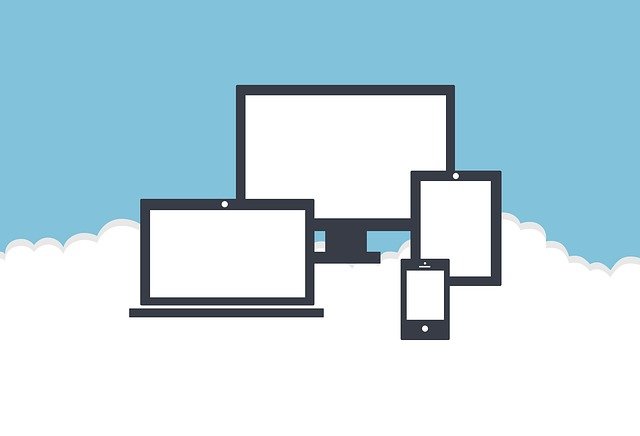
A solution to this need is the implementation of Hybrid cloud systems, where “external” information is safely stored in the cloud, and then integrated into the medical record of patients in the Hospital, through mechanisms that are also secure.
With a scheme of this type, it would be possible to design health protocols that exceed physical barriers, reaching the patients’ own home. The CDSS would even act on the information collected by the patients themselves through their smartphone and the doctors would have a real-time follow-up of their situation.
ProTego project offers elements and mechanisms that make it possible to apply security to schemes of this type, providing encryption of data at rest and access management, security in communications through network slicing, continuous authentication for mobile devices, SIEM, etc. All these cybersecurity elements don’t replace but are aggregated to those provided by the cloud providers and the use of FHIR standard for data exchange reduces to the maximum the exposition of the HIS to the Internet.
References
- https://ec.europa.eu/digital-single-market/en/exchange-electronic-health-records-across-eu
- http://sedom.es/wp-content/themes/sedom/pdf/50a60acec9c533_conferencia_1.pdf
- https://www.himss.org/event-himss-europe-digital
This blog post was written for the ProTego project by Salvador García (Marina Salud).