


Johan Suykens, Joos Vandewalle, Paul Curran (University College Dublin, Ireland), Leon Chua (University of California at Berkeley, USA)
Recently, methods have been investigated for exploiting
chaos in secure communication applications. The basic idea
is to hide a message signal on a chaotic carrier signal,
which is sent along the channel at the transmitter. The receiver
consists of an identical chaotic system. The original message is
recovered then by master-slave synchronization of the two systems.
In our work, the synchronization problem has been approached from
a control theoretical point of view. New methods have been introduced
which are closely related to absolute stability theory and
nonlinear  control theory.
More specifically our method of robust nonlinear
synchronization is able to take into account channel noise,
channel models and parameter mismatch between the master-slave systems.
The new theory applies to Lur'e systems.
Examples of chaotic Lur'e systems are Chua's circuit,
n-scroll circuits and cellular neural networks that consist
of chaotic cells and reveal hyperchaotic behavior.
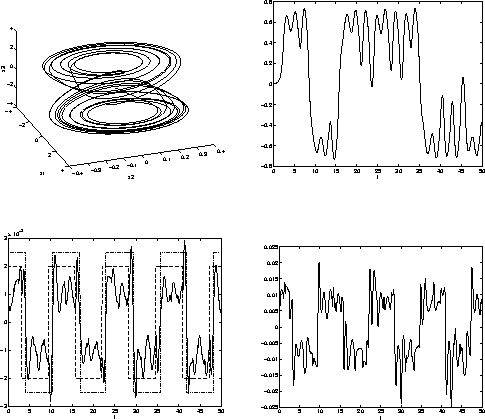
Figure 7: Nonlinear synchronization of Chua's
circuit using linear dynamic output feedback:
(Top-left) Double scroll attractor generated at the master system.
The vector field of the master system is modulated by means
of the linearly filtered message signal  .
(Top-right) Transmitted signal, which is a linear combination
of the state variables of the master Chua's circuit. The message
signal is invisible on this transmitted signal.
(Bottom-left)
 (-),
reference input (- -),
recovered message
 (-.).
(Bottom-right) control signal u(t), applied to the slave system.