


Johan Suykens, Herman Verrelst, Joos Vandewalle
The Fokker-Planck machine offers a new method for global optimization. It combines features of continuous simulated annealing and genetic algorithms. The method follows from the fact that a forward Kolmogorov (or Fokker-Planck) equation can be associated with the evolution of a stochastic differential equation. The transition density which satisfies the Fokker-Planck equation is parameterized by means of a Radial Basis Function (RBF) neural network. By sampling the search space, a learning rule for the RBF network is obtained. Points are generated in search space according to the statistics of the RBF network. After sampling the search space at each generation, information of the local geometry at the sampling points is exchanged. This is done by solving a constrained linear least squares problem with as solution the update of the parameter vector of the RBF network. The development of the method requires an interdisciplinary approach including topics as neural networks, stochastic systems, information geometry, regularization theory, statistics and quantum mechanics.
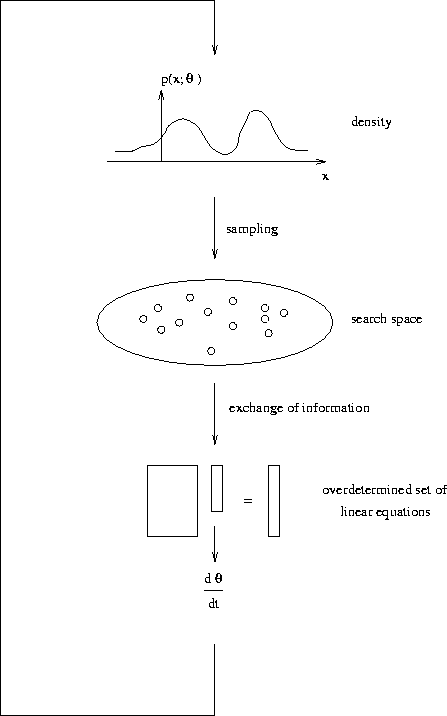
Figure 8: Basic scheme of the Fokker-Planck machine.
Points are generated in search space according to a
density which is parameterized by means of an RBF network.
After sampling the search space by means of a population of points,
the parameter vector of the RBF network is updated by solving a constrained
linear least squares problem. This is repeated for
a sequence of generations.