


Lieven De Lathauwer, Bart De Moor, Joos Vandewalle
Tensors are the higher-order equivalent of vectors (first order) and matrices (second order). They can be imagined as ``blocks'' of numbers, in three or more dimensions. Unlike matrices, higher-order tensors cannot be reduced in general to a diagonal form by orthogonal transformations. For the special case of super-symmetric (i.e. invariant under index permutations) third-order tensors, we have studied the optimal least-squares diagonalization (visualized in figure).
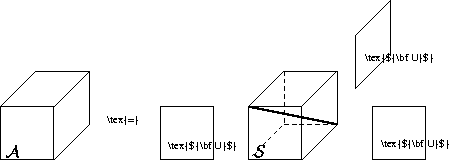
Figure 11: Visualization of the optimal diagonalization, in least-squares sense,
of a super-symmetric third-order tensor by orthogonal transformations.
As already indicated in work by Comon, the computation can take the form of a
Jacobi-type algorithm, where in each step an elementary  -tensor is maximally diagonalized. We have shown that the computation of an
elementary rotation is equivalent to the computation of the best rank-1
approximation of a symmetric
 -matrix.
As an application, we have demonstrated that the problem of Independent
Component Analysis can be solved by simultaneous diagonalization of a set of
third-order tensors, that span the range of the fourth-order cumulant of the
prewhitened data, in which the cumulant is interpreted as a linear mapping from
vectors to third-order tensors. The simultaneous diagonalization of elementary
super-symmetric third-order tensors in the Jacobi computation scheme, is
mathematically equivalent to the simultaneous diagonalization of symmetric -matrices, constructed from the third-order tensors. The technique
shows an excellent performance.