


Lieven De Lathauwer, Bart De Moor, Joos Vandewalle
Most conventional techniques for Independent Component Analysis (ICA) resort to second-order statistics to decorrelate the observed data. The prewhitening step makes these algorithms sensitive to the presence of additive Gaussian noise. As an alternative, we have developed a higher-order-only technique.
The identification problem has been approached in a (linear and multilinear) algebraic framework: our derivation started with the observation that the solution could be obtained from a symmetric Canonical Decomposition (CANDECOMP) of the higher-order cumulant tensor. The CANDECOMP is the optimal approximation, in least-squares sense, of a given higher-order tensor by a sum of rank-1 components. As such it is a generalization of the diagonalization of a given matrix by equivalence or congruence (see figure).
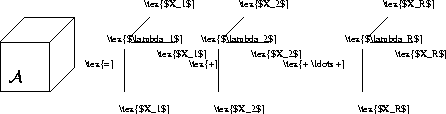
Figure 12: Visualization of the CANDECOMP
of a super-symmetric third-order tensor.
The CANDECOMP components can be computed from the simultaneous diagonalization, by congruence transformation, of a set of matrices that span the range of the higher-order cumulant tensor, interpreted as a linear mapping to a matrix space. This problem can be reformulated as a simultaneous Schur decomposition, for which a Jacobi-type algorithm has been proposed.