


In a CDMA (Code Division Multiple Access) system each user's data is spread over the available bandwidth (spread spectrum) with a distinct code sequence. Typically ``matched filter'' techniques are used to extract the information that was transmitted (see figure). Good cross-correlation features of the different code sequences are required to separate the different users. Asynchronous users and/or multipath propagation however always cause the matched filter approach to be far from optimal, e.g. it still suffers from ``multiuser interference'' (MUI). A typical problem that arises from the MUI is the ``near-far effect'', i.e. nearby users disrupt the detection of a highly attenuated desired signal. In the present systems this is solved by the complex technique of ``power control''.
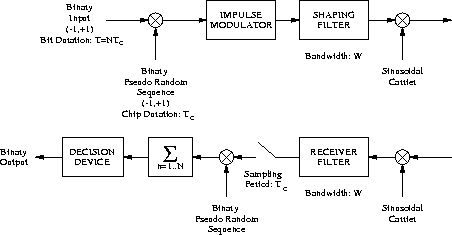
Figure 15: A simple BPSK spread spectrum modem
Another approach found only in recent literature is the ``multiuser'' approach. In these algorithms information of multiple users is jointly used to better detect each user. The important advantage of these receivers is that they are ``near-far resistant''. Because of their complexity however they are of little use in practice.
Current research is focused on the design of efficient ``multiuser'' algorithms which can be implemented in a recursive/adaptive manner. Such algorithms can possibly be found by modeling a CDMA system as a ``fractionally spaced'' system. The aim is to realize algorithms for different scenarios: synchronous or asynchronous CDMA, multipath propagation or not, antenna diversity or not, etc. Research is mainly focused on ``blind'' algorithms, i.e. there is no need for a training sequence to estimate some important parameters of the environment. Finally the algorithmic design is guided by the corresponding hardware design.