


Next: Adaptive multiuser detection algorithms
Up: Signal Processing
Previous: Adaptive cancelation of long
Koen Eneman, Marc Moonen
This project is focused on enhancement and real-time processing of
broadband acoustic signal recordings. Tele-conferencing applications
such as hands-free telephony, tele-classing and interactive multimedia
require hands-free speech recording. The quality of this recorded
speech is often degraded by ``noise'' interference, reverberation and
far-end echoes (see figure). A consequence of this is a lowered speech
intelligibility.
- Interfering ``noise'' degrades the active speech signal as it
typically covers the same frequency spectrum. It may be a colored
noise source (e.g. a ventilator) or a background speaker. Noise
suppression is therefore based on spatial diversity and comes down to
acoustic signal separation. Signal separation can be done by spatial
oversampling, i.e. using multiple microphones. Moreover, as noise
sources can move and change their position, signal separators have to
incorporate adaptivity.
- A typical office room is highly reverberating. The active speaker
may be at a certain distance of the microphone array. The speech signal
is being filtered by the acoustic path, which incorporates all
reverberation effects. This howling effect has a negative impact on
speech intelligibility. Improving the intelligibility of recorded
speech therefore has also something to do with dereverberation.
As the speech signal is not known, this boils down to a blind
equalization problem.
- Far-end echoes are a last type of interference. This filtered
loudspeaker signal is easier to remove as it is known in advance.
Far-end echo suppression is a problem of adaptive channel
identification as the acoustic path between loudspeaker and
microphone(s) is time-varying.
Within this project algorithmic structures are investigated in which
adaptivity, efficiency and parallel implementation play a key role :
acoustic paths are typically characterized by FIR filters with several
thousands of filter taps. A straightforward implementation would lead
to a too high computational burden. Our research is focused on acoustic
beamforming, adaptive algorithms, recursive matrix decompositions,
filter banks and subband processing. A general approach seems
appealing as in a sense all of the 3 subproblems come down to an
adaptive identification of acoustic paths, followed by a compensation
step.
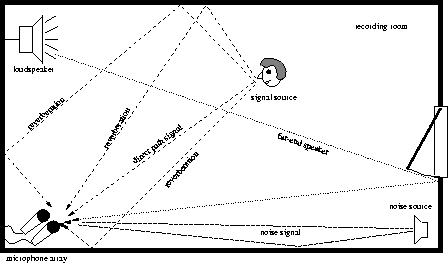
Figure 14: A hands-free tele-conferencing setup.
Next: Adaptive multiuser detection algorithms
Up: Signal Processing
Previous: Adaptive cancelation of long
Peter De Gersem
Thu Mar 27 15:21:50 MET 1997