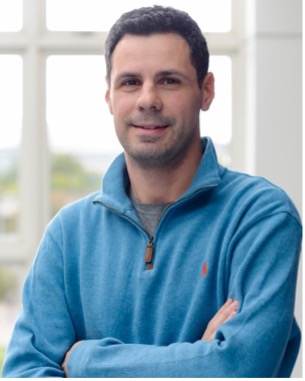
Seminar by Giovanni Russo
Date & Time: 07/04/2026, 14:00 – 15:00
Location: ESAT, Aula R
Abstract: The free energy principle from computational neuroscience proposes that adaptive behaviors emerge from minimizing variational free energy—a bound on the surprise in the data. The principle has been advanced as a unifying account across computational neuroscience, machine learning, and decision-making, and is increasingly invoked in control. In this talk I cast the free energy principle as an optimal control problem in the space of densities. From here, I introduce the Distributionally Robust Free Energy principle. This control-theoretic framework finds optimal policies that minimize the variational free energy across an ambiguity set centered around a nominal, trained model, providing robustness guarantees against training-environment mismatches. Remarkably, despite the apparent abstract setting of the control formulation, we prove it admits a closed-form solution and provide methods to provably compute optimal policies. I will illustrate these ideas with concrete learning and control examples. Across all benchmarks, our approach enables the agents to complete the task even when, in contrast, state-of-the-art methods fail.
Giovanni Russo (Senior Member, IEEE) is an Associate Professor of Automatic Control at the University of Salerno, Italy. He was previously with the University of Naples Federico II (Ph.D. in 2010), Italy, Ansaldo STS (System Engineer/Integrator of the Honolulu Rail Transit Project in 2012–2015), Hawai’i’, USA, IBM Research Ireland (Research Staff Member in Optimization, Control and Decision Science, from 2015 to 2018) and University College both in Dublin, Ireland (in 2018–2020). Dr. Russo has served as Associate Editor for the IEEE Transactions on Circuits and Systems I: regular papers (2016–2019) and the IEEE Transactions on Control of Network Systems (2017–2023). Since January 2024, Dr. Russo is serving as Senior Editor for the IEEE Transactions on Control of Network Systems. He is also a member of the Board of Directors of the Modelling and Engineering Risk and Complexity Ph.D. program at the School for Advanced Studies in Naples. His research interests include control in the space of densities, contraction theory, analysis/control of nonlinear systems and networks, neuro-inspired computation and learning.