
STADIUS Research Domains
The STADIUS research is organized into the following main directions:
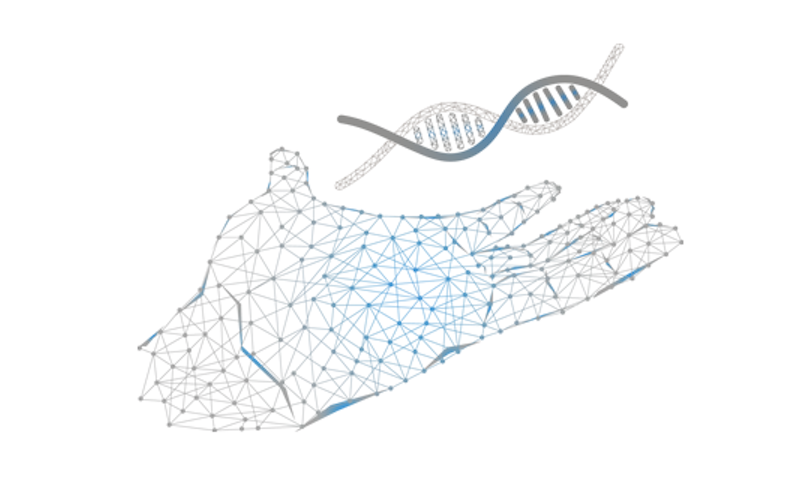
Bioinformatics is the integration of mathematical, statistical, and computer methods to analyze biological, biochemical, and biophysical data.
Bioinformatics is the integration of mathematical, statistical, and computer methods to analyze biological, biochemical, and biophysical data.
The field of Bioinformatics, which is the merging of molecular biology with computer science, is essential to the use of genomic information in understanding human diseases and in the identification of new molecular targets for drug discovery.
Research directions are in clinical genomics, drug discovery, genomic data fusion, disease gene discovery and disease management, taking into account federated analysis and privacy-preserving machine learning.

Biomedical data processing research is focused on leveraging advanced machine learning / artificial intelligence, signal processing and (multi-) linear algebra for the development of reliable algorithms for biomedical signal analysis. We focus on various physiological signals of interest, e.g. EEG, ECG, EMG, spirometry, among others. The ultimate goal is to enhance and automate medical diagnostics and monitoring. Applications are oriented towards both ambulatory and in-hospital monitoring, decision support systems, brain-computer interfaces, and wearable technology.
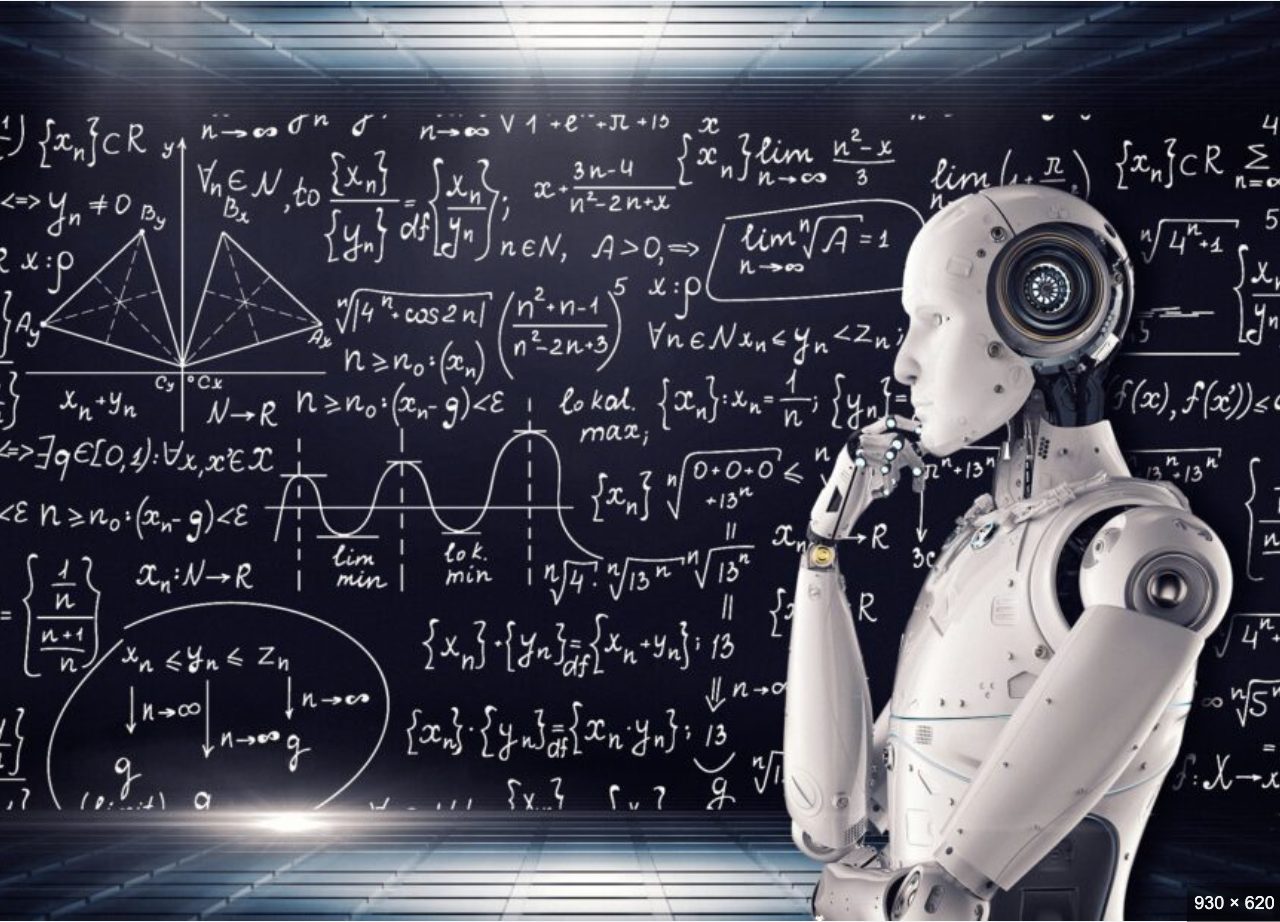
In the area of data science and artificial intelligence both theory and applications are studied. New modelling approaches are proposed related to neural networks, deep learning, support vector machines and kernel-based models, tensor-based methods, probabilistic graphical models, and others, for a wide range of tasks in supervised, unsupervised and semi-supervised learning, and beyond. Several methods are generically applicable to different application fields. Several applications are studied e.g. in systems and control, time-series analysis, biomedicine, bioinformatics, weather forecasting, pollution modelling, energy consumption modelling and prediction.

To face the increasing demand for communication services, new (e.g. wireless) communication networks are currently being installed and existing (e.g. wireline) networks are being upgraded. Optimal performance in such networks is obtained with novel high-speed modems, where advanced digital signal processing (DSP) techniques are an indispensable and crucial new ingredient.
The research on DSP algorithms for Digital Communications reported here aims at the development of equalization, multiple-access (SDMA, CDMA), echo and interference cancellation techniques for high-speed telephone line modems (ADSL/VDSL), cable modems, and wireless communication.
Audio signal processing activities are targeted towards speech communications, conferencing, voice-control, and hearing aid applications. Multi-microphone signal enhancement, dereverberation, acoustic echo cancellation, and feedback cancellation are points of focus.

We aim at understanding systems in its broadest sense. A major objective is mathematical engineering (engineering mathematics) with the development of models and methods that are generically applicable to different application areas. Mathematical modelling techniques are investigated from different points of view in an interdisciplinary and integrated fashion. It involves areas as numerical linear algebra, optimization modelling and convex optimization, systems and control theory, system identification, statistical/machine learning, neural networks, signal processing and pattern recognition, complex networks/systems and quantum information theory. Specific applications are e.g. in data driven modelling, advanced process control, data mining, biomedicine and bioinformatics, knowledge discovery and information retrieval