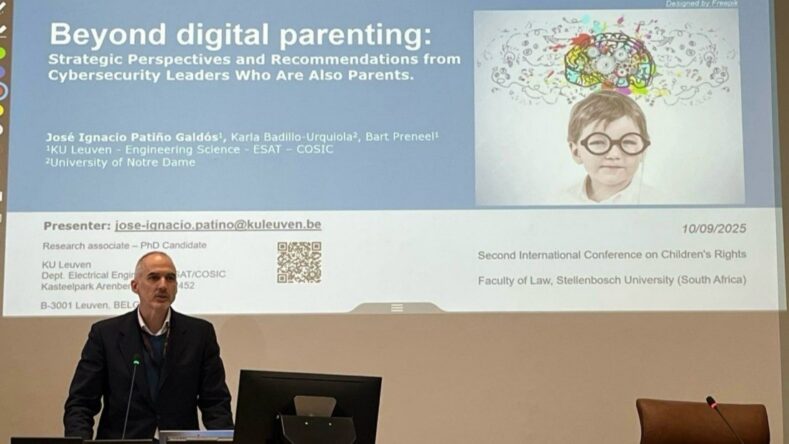
Last week, I had the great opportunity to attend my first-ever academic conference as a junior researcher. It felt like stepping into a new chapter, one filled with curiosity, learning, and the chance to contribute to important conversations about children’s rights, artificial intelligence, and online safety in the digital environment.
To be honest, I didn’t know what to expect. But I felt the excitement of this business trip, similar to my first international missions over 25 years ago, when I was a young graduate starting to work for a big multinational. Back then, I had the chance to discover Europe, in all its diversity and beauty, and stepping well outside my comfort zone. This time, I felt like I was starting from scratch again, with the same excitement of a first-timer, ready to attend my first academic conference, participating as a speaker for the first time to share the preliminary findings of our work (co-authored with Karla Badillo-Urquiola, Ph.D. and Bart Preneel), and the first time on the Africa continent (South Africa, to be precise).
There were many highlights, and a few lowlights. Sometimes, they even intertwined.
A Low-High Moment: The Keynote
One of the most memorable experiences started as a bit of a “low-high.” I was initially disappointed that the second keynote speaker, Sonia Livingstone, appeared only online for about an hour. Children in the audience had been invited to ask questions, but in this session, none did. Perhaps because the speaker was remote?
This stood in contrast to the first day, during the pre-conference symposium, where children asked many thoughtful questions, especially to a speaker from a well-known streaming platform. One child even suggested that Netflix could use its reach to promote digital literacy, like adding short educational segments to encourage critical thinking. It reminded me of Karrewiet in Flanders (Belgium), a platform that engages children with educational media tailored for them, in safe and enjoyable ways.
Despite the initial disappointment, that keynote session turned into a highlight for me. As the first “older child” who dared to take the microphone, I had the opportunity to share an idea directly with prof. Livingstone, who I deeply admire and respect: how to advance the practice of safety by design and meaningfully consider children as personas during the design phase.
Even while acknowledging industry pressures (tight budgets, time constraints, and market needs), it felt rewarding to contribute to a discussion about ethics and responsibility in product and software design.
Design Thinking and the Missing Persona
With over two decades of experience leading digital product development (including roles as an Agile Product Owner in B2B environments, and certification in Design Thinking), I’m used to working with personas. But we always focus on the users we intend to serve.
Never, for obvious reasons in the Business to Business world, did we consider children as potential users of our products.
And yet, in all the frameworks and methodologies I’ve learned from top-tier universities and professional organizations, I’ve never once heard the need to consider unexpected users, such as children.
So I asked: 💡 What if we shared this idea with other academics advancing design practices? 💡 What if product designers and software engineers asked: Could children use this product, even if not intended? 💡 And if so, what would be the impact?
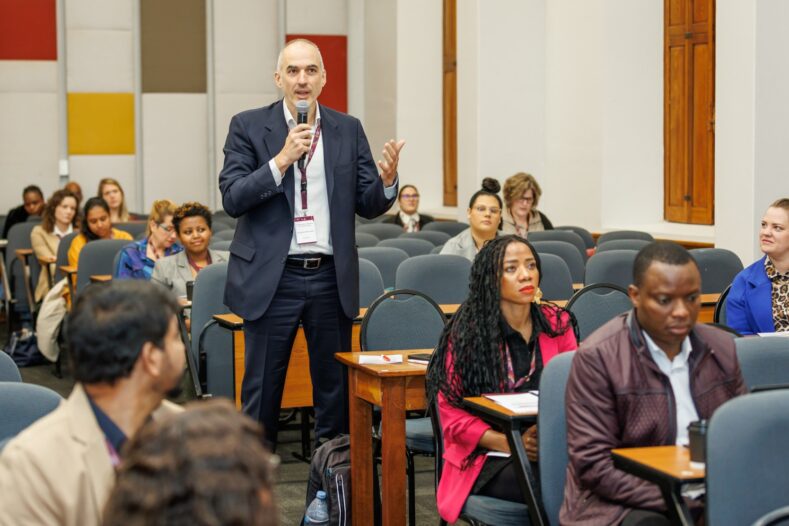
Obviously, based on research shared during the conference, many companies design with children and youth in mind as a persona, but unfortunately, without taking their best interests in mind. It seems they create products against them, and it is worth highlighting the child rights by design principles Sonia shared with the audience.

Learning Is a Two-Way Street
Another key point: it’s not only about thinking about children, it’s about thinking with children. 🗣️ Talk to them. 👂 Listen to them. 🤝 Engage with them.
Conferences aren’t just for listening, they’re for shaping the conversation. This happened not only during the official presentations, but also through informal exchanges with other participants, including youth participants who were part of the program. They will be the shapers of tomorrow’s world, and they can start today if we dare to listen to them as true experts of their own lives, and respect their rights.
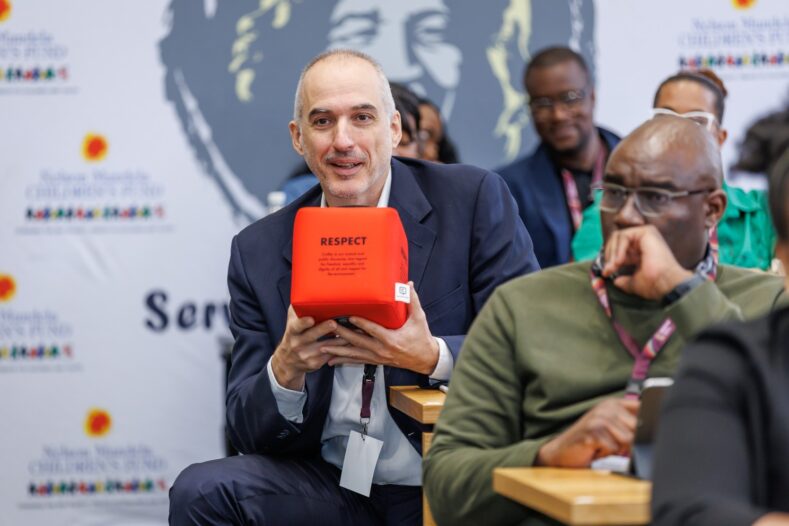
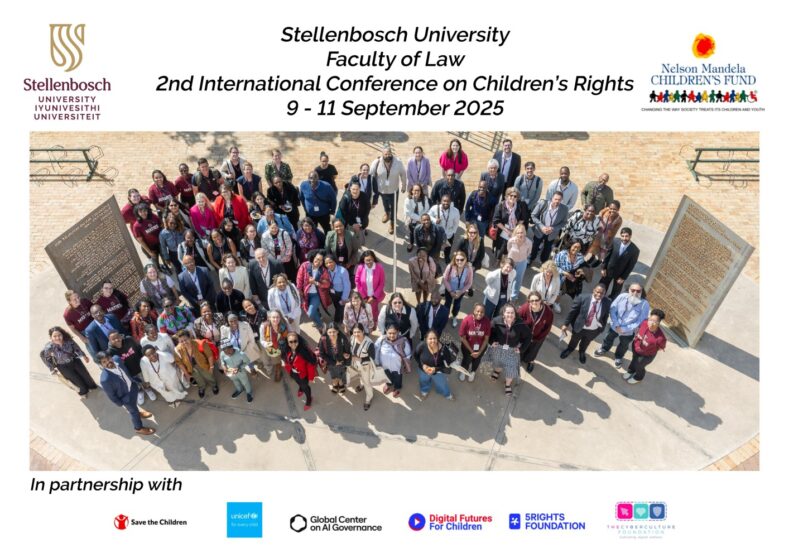
This first conference was full of learnings, connections, and moments I’ll carry forward, and I want to thank the organizers for making it happen (especially Dr Admark Moyo and his wonderful team), while recognizing also the support of the Flemish Government’s Cybersecurity Research Program.
Since it’s impossible to capture everything in one post, I plan to share more highlights and reflections in future updates. If you attended the conference, or are interested in advancing children’s rights and wellbeing in the digital space, including supporting parents, I’d love to hear from you.
Bio
José Ignacio Patiño Galdós is a research associate and PhD candidate with the KU Leuven Computer Security and Industrial Cryptography (COSIC) Research Group, focusing on cybersecurity, children’s rights, and digital parenting. With over two decades of industry experience leading global digital transformation programs, he now draws inspiration from his role as KISO (Kid Information Security Officer) for his teenage children, who fuel his commitment to digital parenting and children’s online well-being.
#ChildrensRights #DigitalWellbeing #DigitalParenting #Cybersecurity #AcademicConferences #ReflectionsFromFirstConference #ICCRStellies
Original blog post: https://www.linkedin.com/pulse/from-industry-academia-reflections-my-first-academic-pati%C3%B1o-gald%C3%B3s-277ae/


